
Overseas Chinese who travel to Taiwan for aesthetic medicine often encounter a question that's harder to answer than the surgery itself: what do I actually want to look like?
It's not that they don't know what they'd like to adjust. Rather, growing up in a Western society means their sense of beauty has quietly been pulled in two directions their whole lives. On one side, there's the aesthetic passed down by their families and Asian pop culture — natural, even, soft. On the other, there's what they see around them in the West — dimension, contrast, distinctiveness. Neither is right or wrong, but they point in different directions. Choose the wrong direction, and the surgical result may not be what you were hoping for.
This article won't tell you which aesthetic is better — beauty has no hierarchy. What it will do is lay out the core differences between these two worldviews, to help overseas Chinese who live between them make a choice that truly fits.
Beauty isn't about right or wrong. It's about what language your face wants to speak.
Face Shape & Contour: From Softness to Dimension

Asian beauty's preference for face shape can be summed up in one idea: the contour should flow. Oval faces, melon-seed faces — the core concept behind all these ideals is smooth, uninterrupted lines, free of sharp angles or abrupt bone transitions. This is why facial contouring surgery (cheekbone reduction, jaw reduction) is so common in Asia — many people hope to create a smoother facial silhouette.
Western aesthetics are different. Westerners are naturally born with more pronounced bone structure — higher brow bones, more defined jawlines. What they pursue is not about "smoothing away angles" but about "making structure more prominent." The sharpness of the jawline, the depth of the brow bone, the fullness of the cheekbones — these bone-emphasising features are at the heart of Western beauty.
For overseas Chinese, navigating between the two is especially delicate. Smooth away too much and you risk losing your individuality. Keep too many angles and they may not harmonise with your face shape. The key isn't "what to do" — it's "what to preserve, and what to refine."
| Aspect | Asian Preference | Western Preference |
|---|---|---|
| Face Shape | Smooth oval or melon-seed shape, soft with no sharp angles | Structured V-line, sharp jawline definition |
| Nose | Natural height, moderate nostril width, overall harmony | High nasal bridge, pronounced tip, strong three-dimensionality |
| Eyes | Soft and natural, moderate double eyelid fold, no scleral show | Deep-set eye sockets, prominent double eyelids, intense gaze |
| Lips | Well-defined but not exaggerated | Full, plump lips, distinct Cupid's bow |
| Skin Tone | Even, bright, uniform complexion | Healthy glow; tanned skin also widely appreciated |
| Physique | Slim and proportionate, natural curves | Pronounced waist-to-hip ratio, fuller curves |
Facial Features: Different Priorities
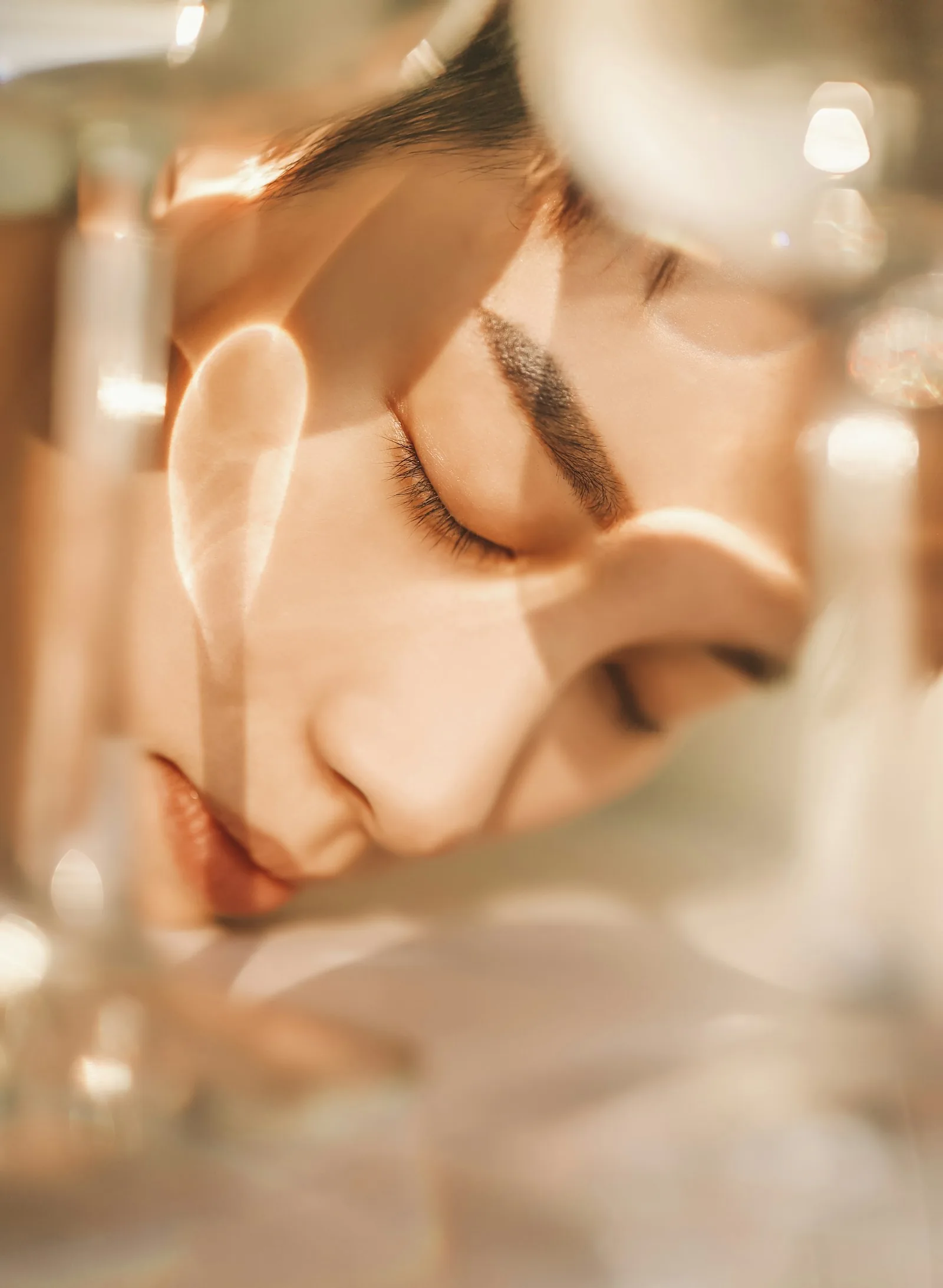
The same rhinoplasty — Asian and Western patients approach it differently. When Westerners get rhinoplasty, it's often to refine the tip or adjust the nostrils, as their existing bridge height is usually already sufficient. When Asian patients seek rhinoplasty, many hope for a slightly higher bridge to add dimension to the face — but not so much that it feels out of place against Asian facial structure.
The same goes for double eyelid surgery. In Asia, it's about creating a natural crease that makes the eyes appear brighter without looking deliberate. In the West, double eyelid surgery is far less common, because Westerners naturally have deeper eye sockets — their eyelid surgeries are more often about addressing ptosis or under-eye bags.
The difference in facial contouring is also pronounced. Asian jaw reduction is rarely just about grinding bone down. An experienced surgeon simultaneously considers your soft tissue thickness, skin elasticity, and overall proportions — the goal is to make the lines smoother while keeping them natural, not to make the face unnaturally small. Western facial contouring, by contrast, more frequently involves implants (chin augmentation, cheek implants) — adding structure rather than reducing it.
The Overseas Chinese Position: An Aesthetic Between Two Worlds
This may be the most important section of the entire article. Overseas Chinese occupy a different aesthetic space than both native Asians and Westerners.
You may have experienced this: when you return to Asia, relatives say you've "grown more cosmopolitan." In the West, colleagues say you have "delicate features." You live between two beauty standards — not entirely Eastern, not entirely Western. This is both a challenge and an advantage.
The challenge: sometimes you feel your aesthetic preferences aren't "pure" enough, and you're not sure which side's surgeon to turn to. The advantage: you know better than anyone what "suits you" looks like. It's not about blindly following one standard — it's about finding balance between the two.
In practice, overseas Chinese tend to fall within this range when choosing aesthetic procedures:
- Preserve Asian facial characteristics (eye shape, underlying facial structure)
- Add a touch of dimension (modest bridge height, a smoother jawline)
- Prioritise overall harmony over any single feature standing out
This is also why more and more overseas Chinese are choosing to fly back to Asia for aesthetic treatments — not because Asian surgeons are cheaper, but because they understand the "preserve Asian features while adding subtle dimension" aesthetic better. A good surgeon won't impose their own sense of beauty on you. They listen first, then work with you to find the direction that fits.
There's No Right or Wrong in Beauty — What Suits You Is Best
After all of this, the one thing we really want to say is simply this: aesthetic medicine is meant to help you like yourself more when you look in the mirror — not to help you conform to some external standard.
Before you decide on surgery, take a moment to ask yourself a few questions:
- Am I making this change to feel good about myself, or to meet someone else's expectations?
- Where does my idea of "beautiful" come from — which cultural influences shaped it?
- If no one would ever see the result, would I still want this change?
Once you've found your direction, find a surgeon who understands your aesthetic. And if you're planning a medical trip to Taiwan but aren't sure about your direction yet, feel free to talk with our care coordinators. They've accompanied many overseas guests and can offer honest, thoughtful advice about navigating East-West aesthetic choices — helping you clarify what you truly want.
The East-West aesthetic differences described in this article are general observations. Aesthetic preferences vary from person to person, and there is no single correct answer. Surgical direction and methods should be determined through thorough communication with your attending physician. Far From Home Care does not provide medical advice.
Frequently Asked Questions
What is the biggest difference between Asian and Western beauty standards?+
The biggest difference lies in the starting point. Asian beauty tends toward naturalness, harmony, and wholeness — smooth contours, even skin tone, and soft facial proportions. Western beauty leans toward dimension, contrast, and distinctiveness — deep-set features, fuller lips, and pronounced curves. This difference stems from how each culture optimises the natural features of their own faces. Neither is right or wrong — they simply begin from different places.
How do overseas Chinese aesthetic choices differ from those in Asia and the West?+
Because they live in a Western environment, overseas Chinese often fall somewhere in between. Many want to "preserve their Asian features while adding a touch of dimension" — not to completely transform into a Western contour, but to optimise their own face shape so they feel more vibrant and at ease. This is also why more overseas Chinese are choosing to return to Asia for procedures: surgeons there better understand Asian facial structure and aesthetic preferences.
Are procedures like jaw reduction and rhinoplasty done the same way in Asia and the West?+
Not exactly. For rhinoplasty, Western surgeons often focus on increasing bridge height, while Asian surgeons commonly address nostril width at the same time for overall harmony. The same goes for jaw reduction — Asian facial contouring surgery places greater emphasis on preserving soft tissue and achieving a natural curve, rather than simply shaving bone down. Choosing a surgeon experienced with Asian faces usually yields results closer to what you envision.
Should I choose an Asian or Western aesthetic style?+
There is no one-size-fits-all answer. The key is to ask yourself: what do you want your improved self to look like? If you want a more refined version of yourself rather than becoming someone else, Asian surgeons are often more attuned to this "natural enhancement" approach. If you're after a dramatic transformation, Western approaches have their strengths too. What matters most is communicating thoroughly with your surgeon so they understand your aesthetic preferences — rather than letting them decide based on their own sense of beauty.
Where should overseas Chinese living in Western countries go for procedures?+
There is no absolute answer. The advantage of choosing Taiwan or Asia: surgeons are more familiar with Asian bone structure and soft tissue characteristics, communication about aesthetic goals is more straightforward, and costs are typically lower. The advantage of choosing the West: convenience and no long-haul flights. A growing number of overseas Chinese are adopting a "surgery in Asia, recovery locally" model — using a visit home or a dedicated trip to complete the procedure and recovery period, letting a surgeon familiar with Asian faces perform the work while enjoying Taiwan's healthcare quality and recovery care services.
Beauty, when it comes down to it, isn't about picking a side. The East has its gentleness, the West has its strength. Your face doesn't need to answer to either — only to yourself. Found your direction yet? The next step is bringing that vision to a surgeon who understands you. And if you'd like to talk it through first, our care coordinators are just a WhatsApp or WeChat message away.